For most community banks, Abrigo BAM+ and Nasdaq Verafin are the two transaction monitoring platforms built specifically for community banking's actual conditions: proven integration with the core systems community banks already run, and examiner-familiar workflows sized for a lean compliance team. Both are purpose-built for community financial institutions rather than adapted down from an enterprise platform. Newer AI-native platforms, including Flagright, are worth evaluating for a community bank that wants faster deployment and no-code rule configuration, but should be weighed against Abrigo and Verafin's deeper, verified trFor most community banks, Abrigo BAM+ and Nasdaq Verafin are the two transaction monitoring platforms built specifically for community banking's actual conditions: proven integration with the core systems community banks already run, and examiner-familiar workflows sized for a lean compliance team. Both are purpose-built for community financial institutions rather than adapted down from an enterprise platform. Newer AI-native platforms, including Flagright, are worth evaluating for a community bank that wants faster deployment and no-code rule configuration, but should be weighed against Abrigo and Verafin's deeper, verified track record with community bank examiners and core systems specifically.
Why a community bank's transaction monitoring needs differ from a large bank's
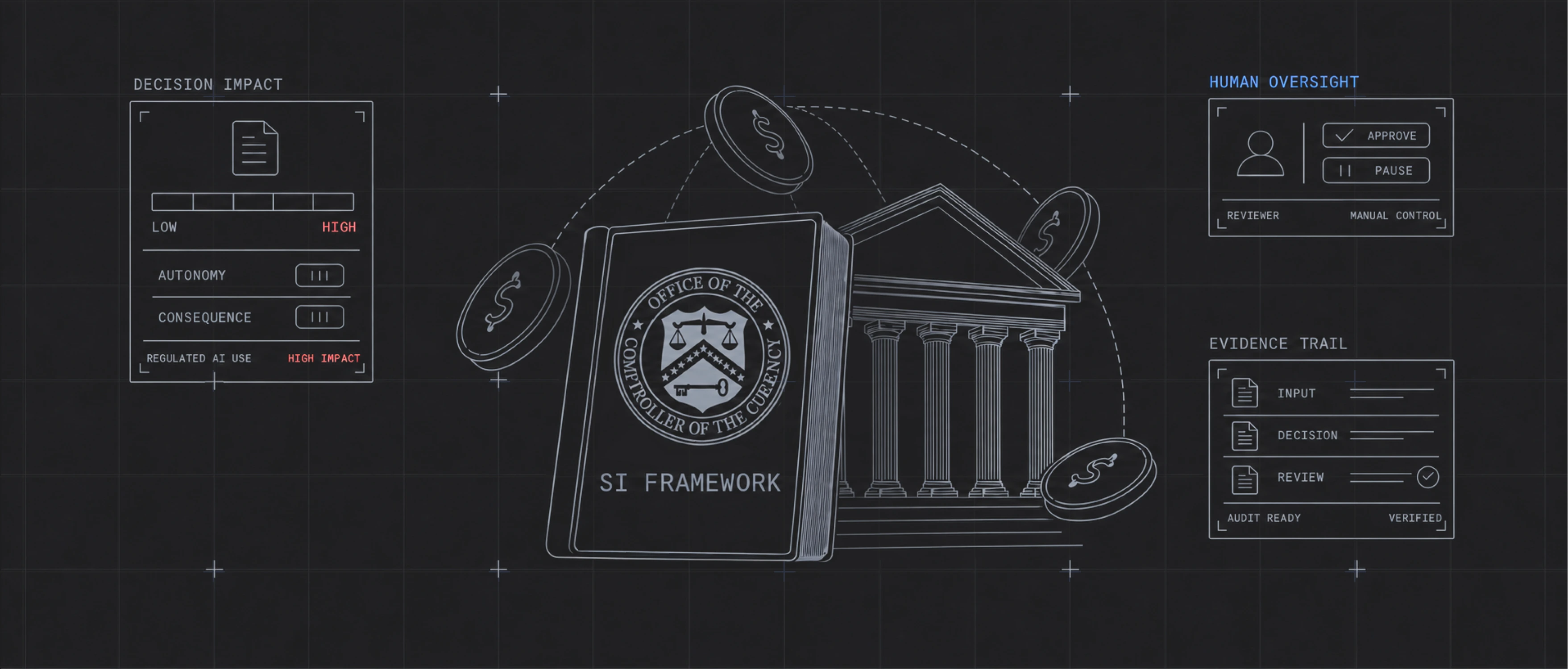
A community bank carries the same BSA/AML obligation as a large bank, but examines and operates under different practical constraints. The OCC's BSA examination framework directs examiners to weigh a bank's monitoring systems against its overall risk profile, transaction volume, and adequacy of staffing, which means the standard scales to the institution rather than staying fixed. A generic, enterprise-calibrated rule set built for a large bank's transaction mix is a poor match for that standard at a community bank with a concentrated, local customer base.
Core system dependency is a bigger factor for a community bank than for most large banks. Fiserv, Jack Henry, and FIS together process more than 70% of U.S. banks, and a community bank is very likely running its general ledger, deposits, and loan data on one of these three. A transaction monitoring platform's real integration depth with the specific core a bank runs, not a generic claim of connectivity, determines how much manual data wrangling the compliance team ends up doing.
Staffing is also different in kind, not just in size. A community bank's BSA function is often one to three people who also cover other duties, so a platform that generates a high volume of low-quality alerts imposes a cost a large bank's larger team could absorb but a community bank's cannot.
Evaluation criteria
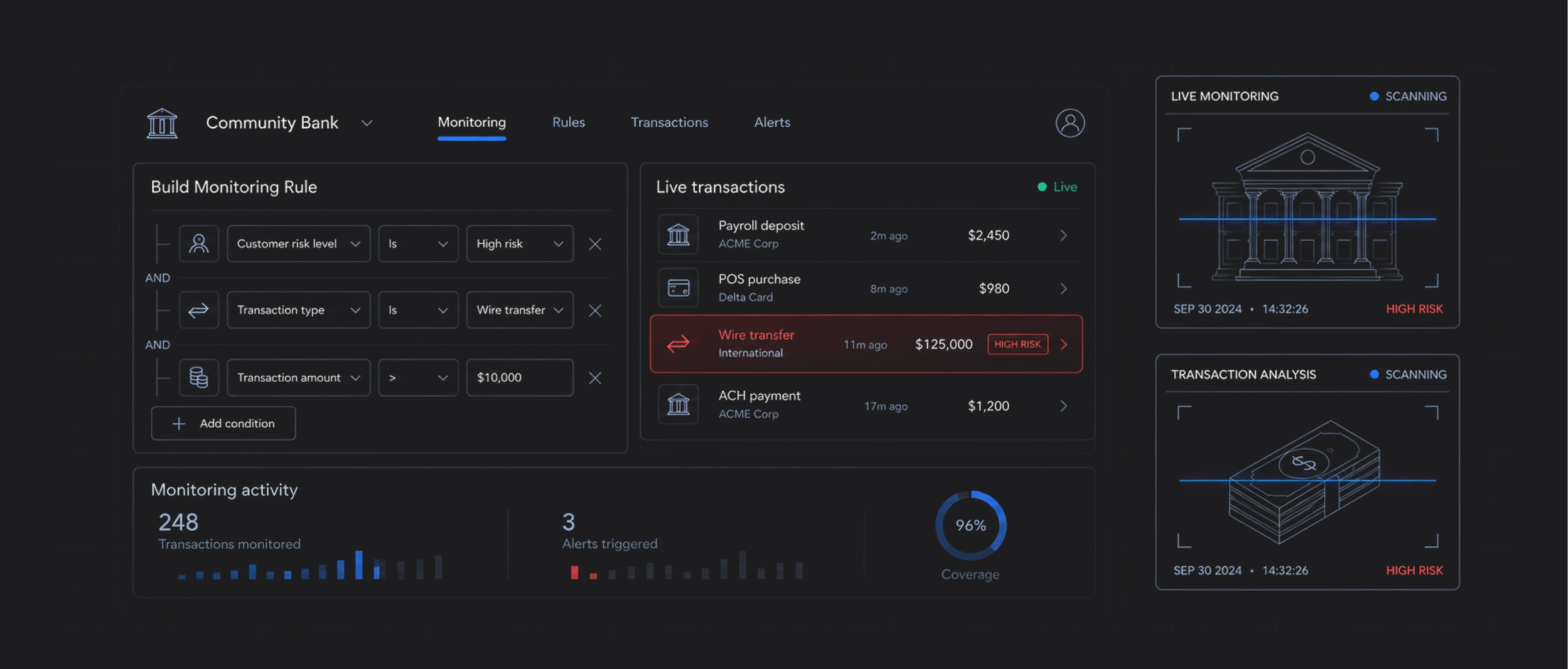
Risk-based coverage. Confirm the platform's rules and thresholds can be tuned to the bank's actual risk profile, its specific customer mix, product lines, and geography, rather than shipping with generic defaults calibrated for a much larger institution. Examiners specifically look for evidence that monitoring resources are concentrated on a bank's own highest-risk areas.
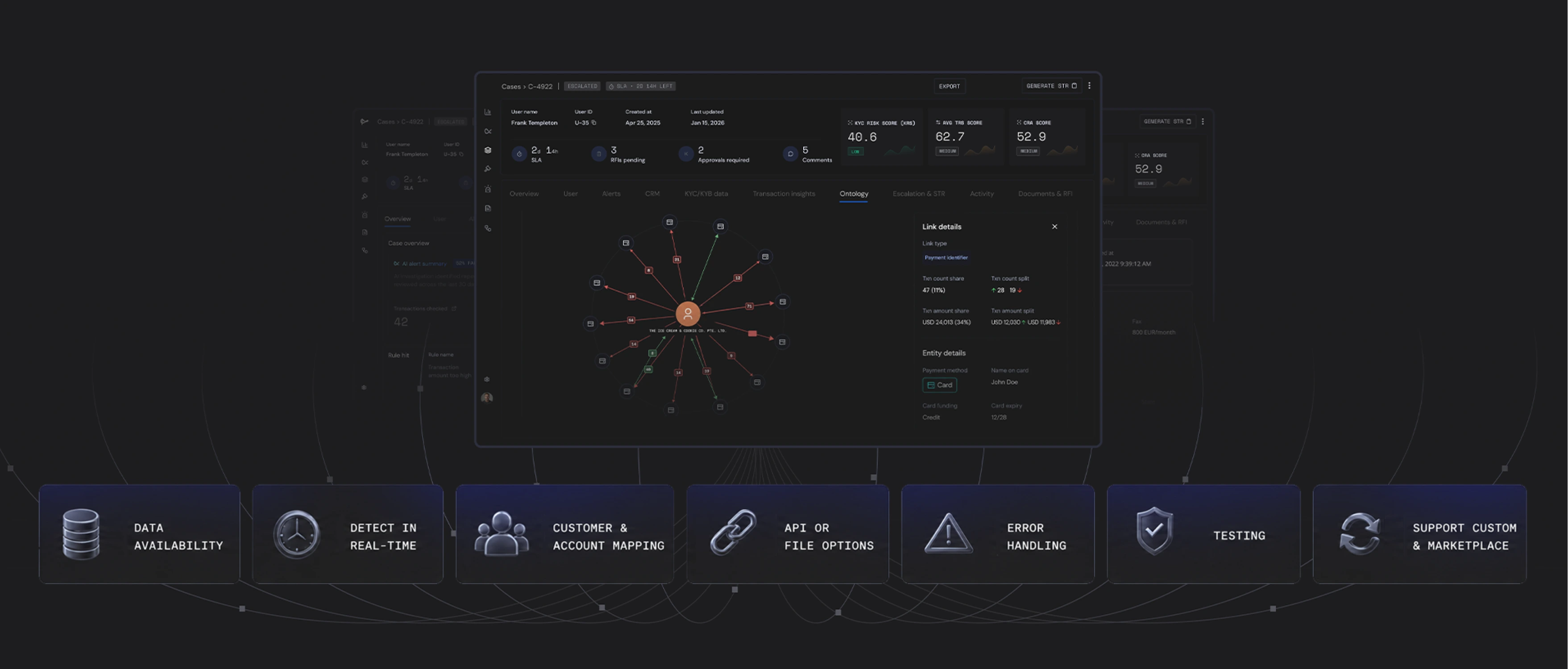
Core data integration. Confirm the platform has a tested, working integration with the bank's specific core provider, Fiserv, Jack Henry, or FIS, rather than a general claim of API connectivity. This is usually the single biggest driver of implementation cost and timeline for a community bank.
Alert quality. Ask for a realistic false-positive rate at the bank's actual transaction volume, not a headline reduction percentage from a much larger customer. A high false-positive rate taxes a lean team's time more than almost any other factor.
Investigation workflows. Confirm case management pulls customer context automatically once an alert fires, rather than requiring an analyst to look up account history in a separate system. That handoff is where a lot of investigation time disappears for a small team.
Reporting. Confirm SAR and CTR filing is direct and electronic, with narratives that auto-populate from the case record, and that the platform produces an audit trail an examiner can review without the compliance team assembling it by hand.
Implementation demands. Ask what implementation actually requires from the bank's own staff, not just the vendor's timeline. A platform that assumes a dedicated IT team is a poor fit if the bank doesn't have one, regardless of how strong the detection engine is.
Fit for a lean compliance team. Ask what ongoing support looks like once the platform is live, specifically whether the bank gets a named contact or a general ticket queue. A one-to-three-person BSA team often can't afford to wait days for an answer during an active investigation.
How the main options compare
Abrigo BAM+ is built specifically for community banks and credit unions, and is one of the most established options for this segment. It combines transaction monitoring, case management, customer due diligence, scenario tuning, and direct SAR/CTR filing in one platform, with layered detection across rules, behavioral analysis, and machine learning. Abrigo's own materials report up to 80% time savings from its AI-assisted alert scoring and narrative generation; that figure is vendor-reported and worth confirming against your own alert volume in a pilot.
Nasdaq Verafin is the most widely recognized name in community bank BSA/AML compliance, combining fraud detection and AML transaction monitoring in one system. It includes a 314(b) information-sharing network that lets community banks detect cross-institution patterns their own data alone wouldn't surface. Verafin uses custom, quote-based pricing rather than a published rate card, so getting an actual cost requires a sales conversation.
Enterprise platforms like NICE Actimize and Oracle's financial crime suite are generally not the right starting point for a community bank. They're built for large, complex institutions with dedicated compliance departments and correspondingly large budgets. Their depth of configurability is a real asset for the institutions they're built for, but the implementation complexity that comes with it is a cost most community banks don't need to take on.
Newer AI-native platforms, including Flagright, are worth a look for a community bank that wants faster deployment and no-code rule configuration without engineering support. Flagright reports sub-second decisioning and a two-week typical implementation, and its rules engine lets a compliance officer write and test new scenarios in plain language. Its published customer base skews toward fintechs, payment processors, and digital banks rather than chartered community banks running an established core, so a community bank evaluating it should specifically request a reference customer on a comparable core system and confirm that integration is tested, not theoretical. G2 reviewers also note a learning curve on advanced rule variables and room for improvement in reporting flexibility.
What to verify directly with any vendor
- Ask for a live, working integration with your specific core provider, not a general claim of API connectivity.
- Request a realistic false-positive rate at your own transaction volume, and confirm any vendor-reported reduction percentage against your own data in a pilot.
- Ask what implementation actually requires from your own IT and compliance staff, sized to a team your actual size, not the vendor's largest case study.
- Confirm SAR and CTR filing is direct and electronic, and ask to see the audit trail a specific alert would generate, in the terms you'd need to relay to an examiner.
- If evaluating a 314(b) or consortium network, ask how populated it actually is among institutions comparable to your bank, not just the total customer count.
- Ask directly what ongoing support looks like, and whether you get a named contact or a general support queue.
FAQ
What is the best transaction monitoring software for a community bank?
Abrigo BAM+ and Nasdaq Verafin are the two most established options, both built specifically for community banks with proven core-system integration and examiner-familiar workflows. Newer AI-native platforms like Flagright are worth evaluating for faster deployment and no-code configuration, with a shorter track record specifically at community banks.
Does transaction monitoring software need to integrate with my bank's core system?
Yes. Most community banks run their deposit, loan, and general ledger data on Fiserv, Jack Henry, or FIS, and a transaction monitoring platform's integration depth with that specific core is usually the biggest factor in implementation cost and timeline. Confirm tested, working connectivity with your specific core provider before signing, not a general claim of API support.
Is Verafin required for community bank BSA/AML compliance, or just the most common choice?
It's not required. Verafin is the most widely adopted platform in this segment because of its long track record with community bank examiners and its 314(b) network, but no regulator mandates a specific vendor. Other platforms, including Abrigo and newer AI-native entrants like Flagright, can meet the same regulatory requirements.
How much does alert quality matter for a small compliance team?
Significantly. A community bank's BSA function is often just one to three people, and a platform generating a high volume of low-quality alerts consumes a disproportionate share of that team's time. Ask any vendor for a realistic false-positive rate at your own transaction volume, and verify any headline reduction percentage against your own data before treating it as a benchmark.
Are enterprise AML platforms like NICE Actimize ever right for a community bank?
Generally only for a community bank whose asset size and transaction complexity are approaching a regional bank's scale. These platforms are built for large compliance departments and budgets that most community banks don't have, and the implementation complexity that comes with their configurability is a real cost for a lean team.
Should a community bank consider a newer AI-native platform instead of Abrigo or Verafin?
It depends on what the bank is optimizing for. A newer platform may offer faster deployment and more configurable no-code rules, but with a shorter track record specifically at community banks and a smaller base of comparable reference customers. A community bank considering one should request a reference on a comparable core system and weigh that against Abrigo and Verafin's longer, verified history with community bank examiners.
Bottom line
For most community banks, Abrigo BAM+ and Nasdaq Verafin remain the safest starting point, since both are purpose-built for community banking with proven core-system integration and a long track record with examiners. The deciding factor between the two is usually whether a bank values Verafin's 314(b) information-sharing network more than Abrigo's integrated scenario tuning and AI-assisted alert scoring, or vice versa. Enterprise platforms like NICE Actimize belong on the shortlist only for community banks approaching regional-bank scale. Newer AI-native platforms like Flagright are worth evaluating for a bank that wants faster deployment and no-code configuration, provided core-system integration and a comparable reference customer are verified directly rather than assumed. Whichever platform you evaluate, confirm core integration, realistic alert volume, and ongoing support directly against your bank's own size and staffing, not a vendor's largest case study.
ack record with community bank examiners and core systems specifically.