In 2024, a major bank was fined $3.1 billion, in part because its customer risk-rating system was flawed, with scores that were outdated or built on broken logic, letting high-risk customers slip through undetected. It's a stark reminder that financial crime risk is no longer static. Yesterday's low-risk customer can become tomorrow's biggest liability, and legacy scoring simply can't keep up.
This guide breaks down how modern risk scoring has shifted from a periodic, back-office checkbox to a real-time, intelligent decision layer at the heart of AML and fraud prevention. You'll learn what regulators like FATF and the EBA now expect from continuous, contextual risk assessment and the methodology behind an effective scoring engine, from combining static KYC data with dynamic behavioral signals, to weighted scoring, temporal decay factors, configurable risk tiers, and automatic overrides.
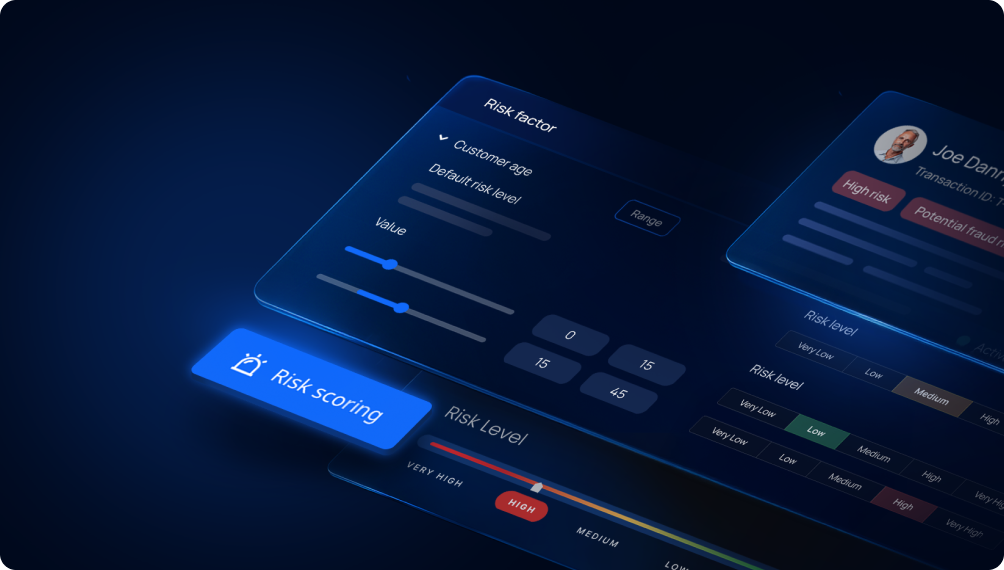
Crucially, it shows how Flagright turns this into practice. Flagright's dynamic risk scoring engine recalculates risk the instant new data arrives, feeds it straight into transaction monitoring, alerts, and SAR workflows at sub-second latency, and stays fully transparent and auditable for examiners. With a no-code builder, pre-configured risk libraries, and explainable outputs, compliance teams can adjust factors, thresholds, and actions themselves without engineering bottleneck while cutting alert noise and focusing resources where the real risk lives.
If you're looking to move from reactive, manual processes to proactive, automated defense, this guide gives you the framework and the proof for why dynamic risk scoring is the foundation of a smarter financial crime strategy. Download it to see how leading institutions are staying ahead of threats, and ahead of regulators.